REFLECT ON LEARNING
What does this mean?
If we accept the premise that the cognitive processes involved in learning are not observable directly and that learning, as such, is invisible, or rather hidden, then endeavours to improve the quality of learning should concentrate on practices that bring these cognitive processes to light. To make the process of thinking visible entails making it an explicit focus of lessons and teaching students strategies to reflect on how and what they learn.
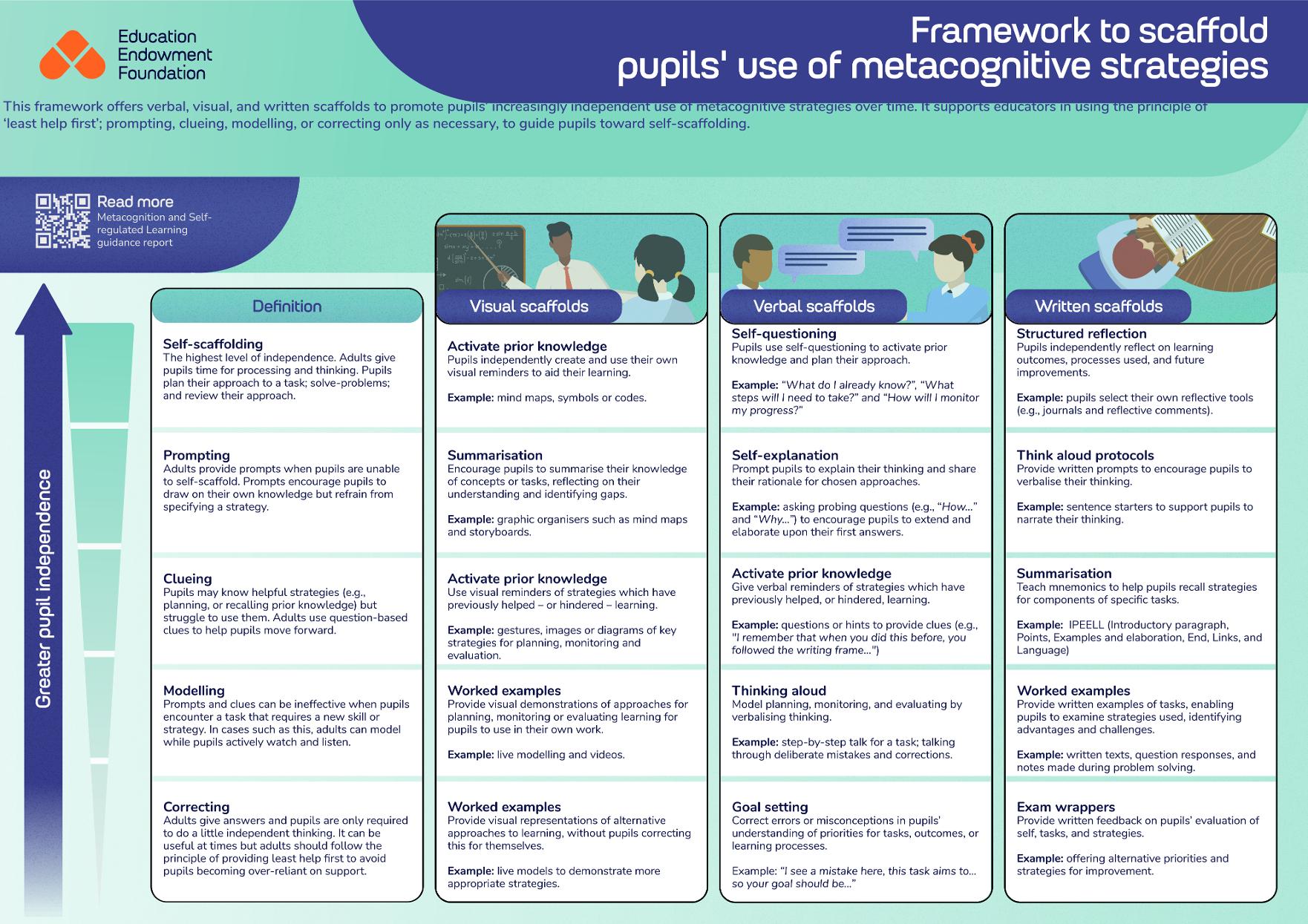
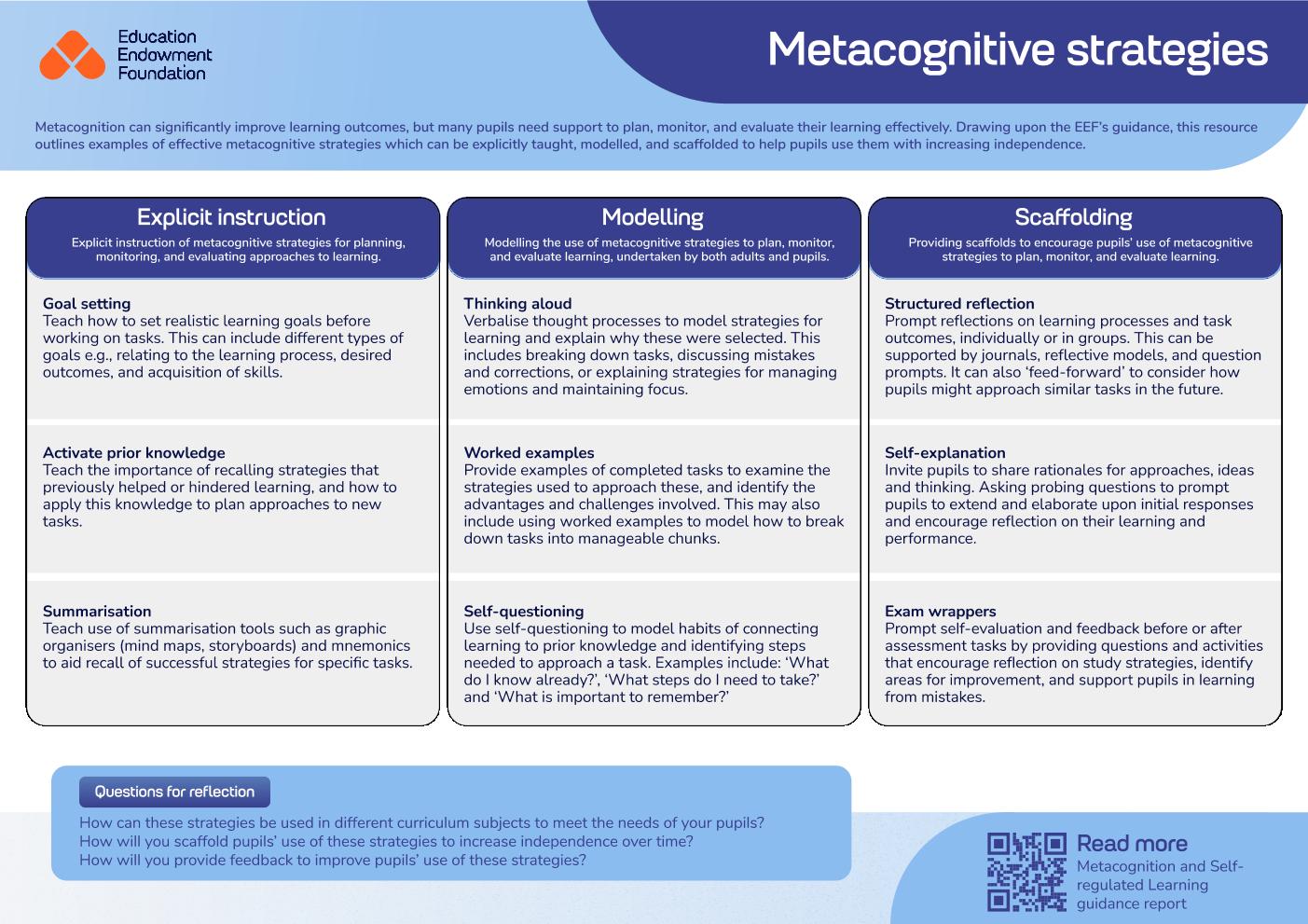
Thinking aloud with students by narrating our thought processes during classroom instruction is a way to model subject knowledge for students and initiate them into distinctive ways of making sense of the world. This kind of teacher talk reveals how subject experts think and supports reflection on both the process and content of learning. Such reflection on learning can develop students’ metacognitive knowledge by encouraging them to consider how best to undertake challenging tasks and carry out the steps required to do so.

When schools take on the mission of cultivating students' thinking, the issue of how students construe thinking and their general metacognitive awareness comes to the fore. It's one thing for us as teachers to articulate the kinds of thinking we are seeking to promote; it is another for students to develop a greater awareness of the significant role that thinking plays in cultivating their own understanding.
Ron Ritchhart
Why is this important?
TO REFLECT ON LEARNING WITH STUDENTS IS TO:
- Make the process of thinking visible and encourage students to examine their own thought processes (Ritchhart, 2011).
- Facilitate the representation of thinking using visual media and scaffolds to document and record students' thinking in class.
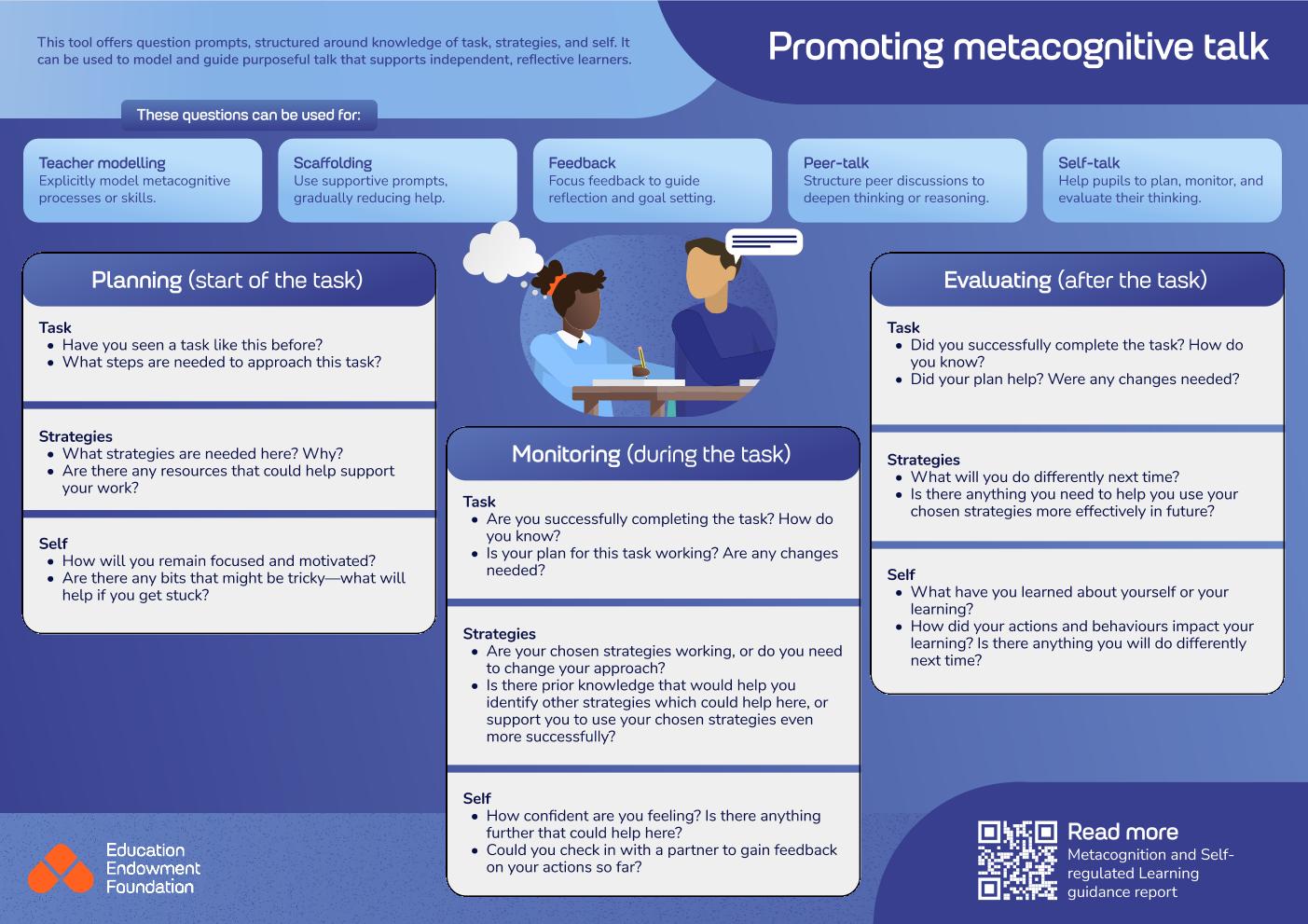
- Enable students to monitor and evaluate their thinking more effectively.
- Enhance students' 'metacognitive knowledge', including students' awareness of their own 'cognitive performance' and capabilities (Flavell, 1979).
- Develop students' ability to assess their level of understanding, judge what they have learned and determine what they need to do to improve.
- Revisit the purpose of learning with students and gauge progress made against learning goals.
- Model metacognitive processes for students in ways that reveal how 'experts' think (Quigley [EEF], 2018).
- Cultivate students' capacity for self-questioning.
- Promote self-awareness in students and foster 'critical consciousness' (Freire, 1970).

Perhaps it is stretching the meanings of metacognition and cognitive monitoring too far to include the critical appraisal of message source, quality of appeal and probable consequences needed to cope with these inputs sensibly, but I do not think so.
John Flavell